
This is worth understanding properly — because the wrong diagnosis costs you money twice.
The water appears where it isn't entering. A chimney leak on a Meath property rarely presents directly below the fault. Water enters through a gap in the flashing or pointing, tracks down the inside of the chimney breast or along a rafter, and appears on a ceiling or wall that could be two, three, or four feet from the actual entry point. A contractor who patches where the stain is on the ceiling and doesn't get on the roof to find where the water came in hasn't fixed anything.
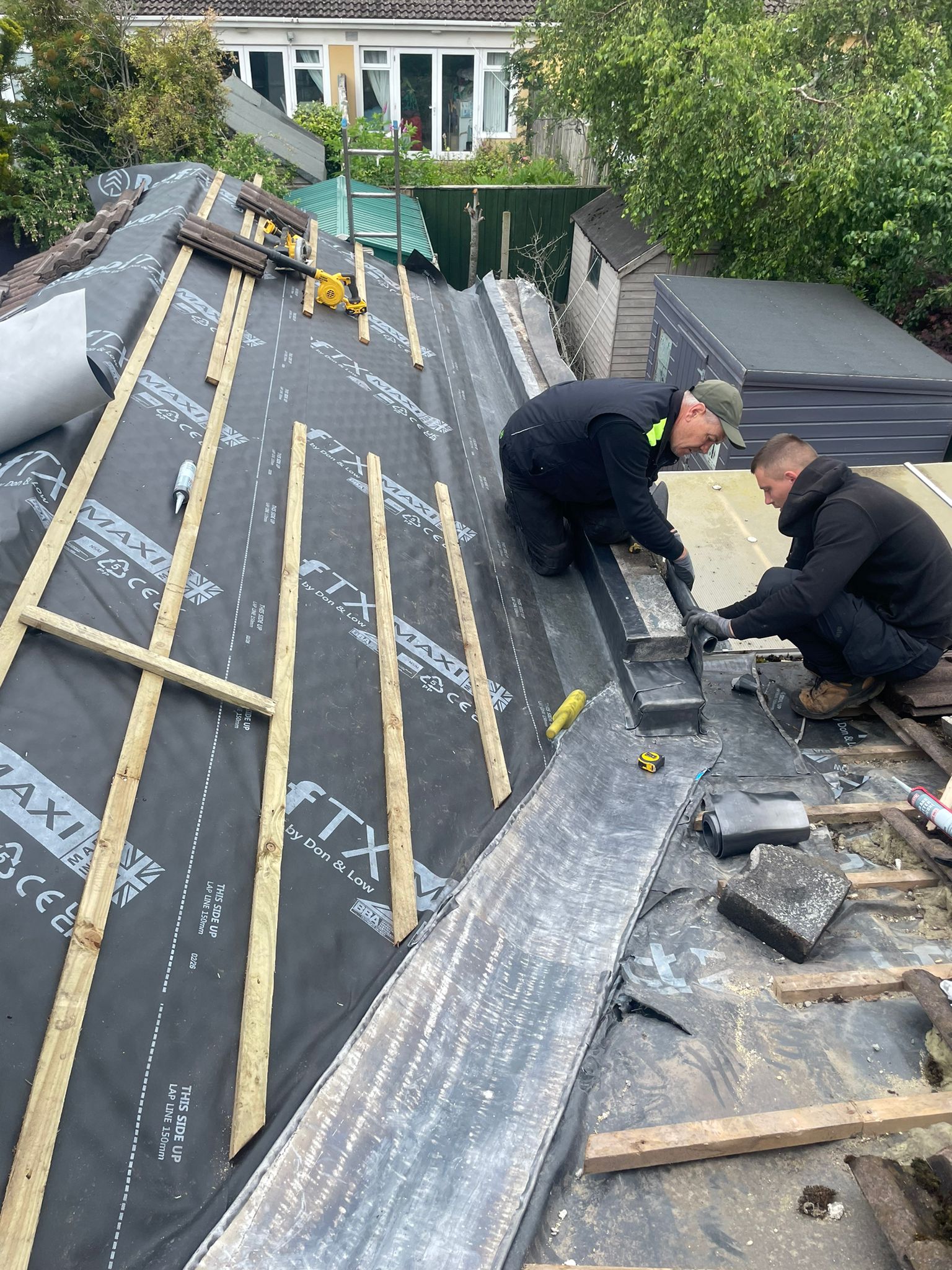
Flashing is the cause in the majority of cases. Lead step flashing and back flashing at chimney bases accounts for a very high proportion of chimney-related leaks on Meath properties — particularly those built between 1950 and 1990 where the original lead is now 35–75 years old. Lead has a natural lifespan of 40–60 years in Irish conditions when correctly installed. A lot of the lead work on Meath's mid-century housing stock is at or past that point.
Mastic is not a repair. We see this on almost every chimney inspection across County Meath — a previous contractor has run a bead of flexible sealant over the flashing-to-wall junction and called it a repair. Mastic degrades in UV, cracks with thermal movement, and typically lasts one or two winters before the gap reopens. It's a temporary weatherproofing measure at best, not a substitute for properly dressed and pointed lead. If your chimney has been "repaired" and is still leaking, mastic is almost certainly why.
Mortar failure is often secondary. Spalling brickwork and open mortar joints are real problems on older Meath chimneys — particularly in exposed locations on higher ground around Kells, Slane and Oldcastle where wind-driven rain is more sustained. But in many cases, the brickwork deterioration is a consequence of water getting in through failed flashing rather than the primary entry point. Repointing without replacing the flashing doesn't solve the underlying problem.


Most of the repeat call-outs we see across County Meath follow the same pattern — a roofer went up, sealed something visible, charged for it, and the leak came back. It comes back because the visible point wasn't the source.
Our process is straightforward:
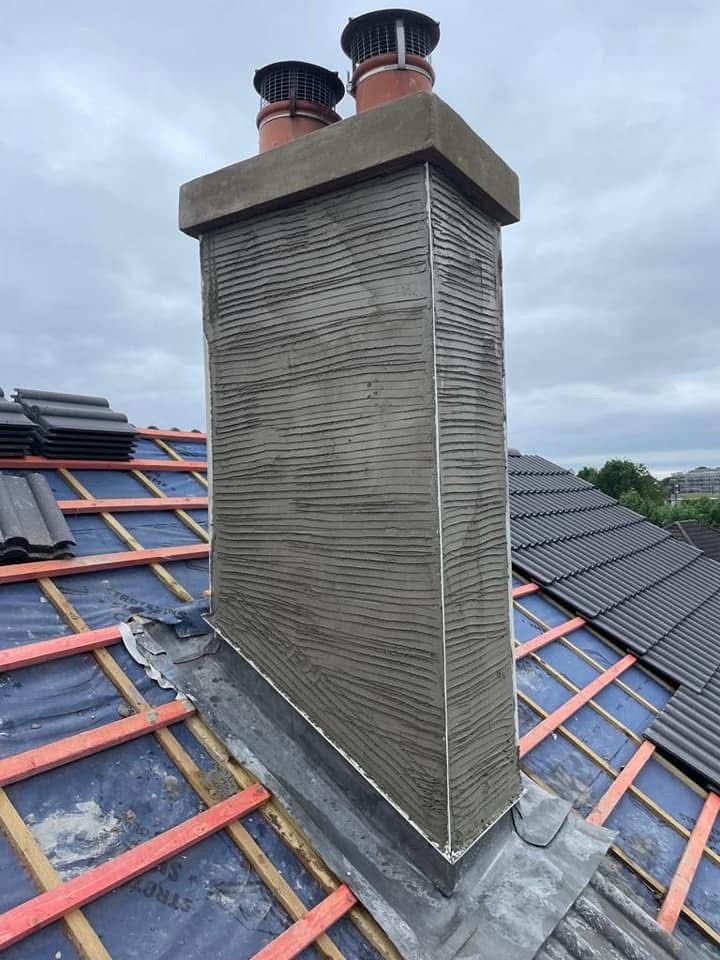
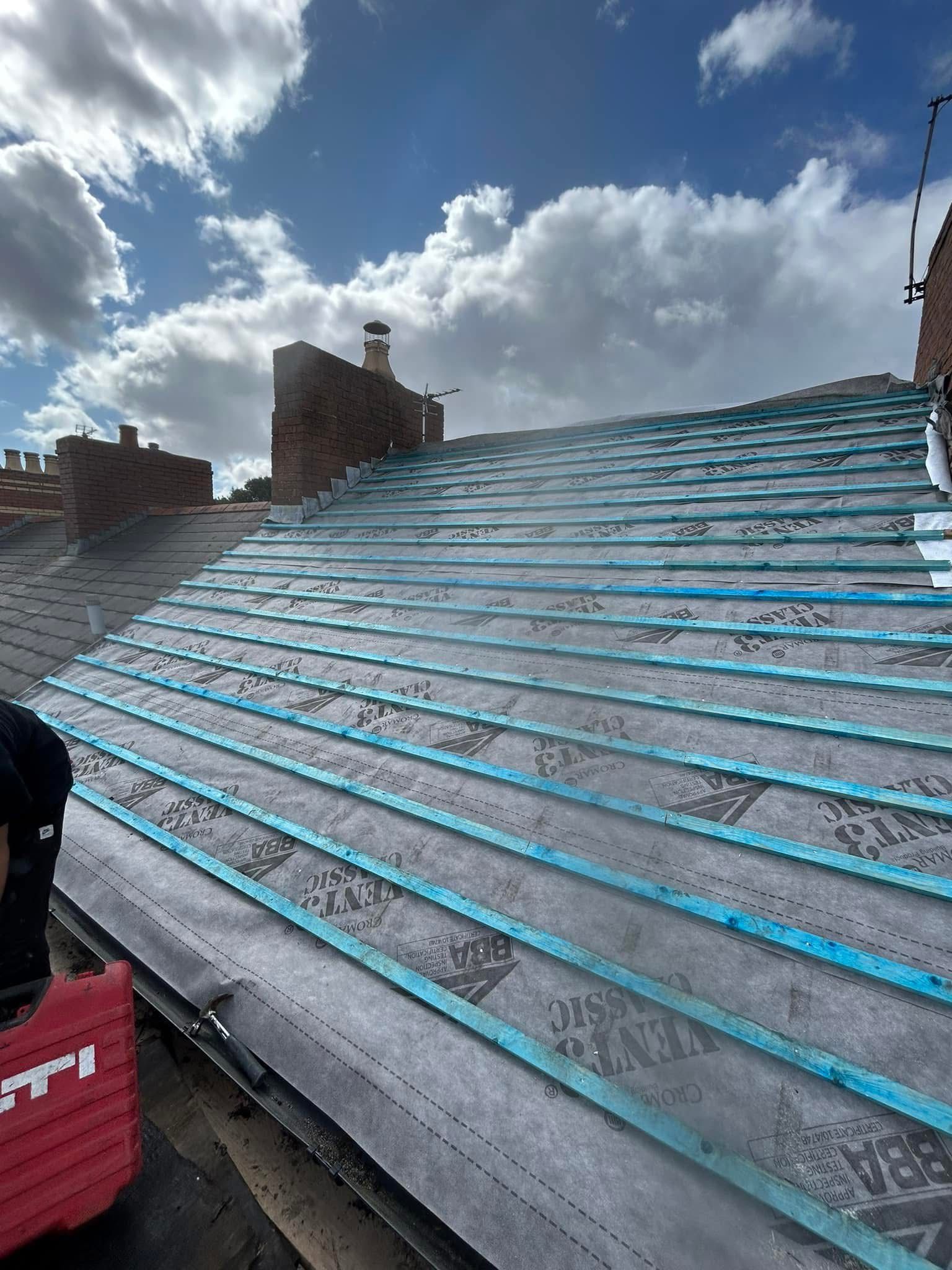
The most common cause of chimney leaks across County Meath — and the most frequently misdiagnosed. Lead step flashing runs up the sides of the chimney stack and is pointed into a horizontal mortar chase cut into the brickwork. Over time, lead oxidises and stiffens, the pointing in the chase fails, and the flashing lifts away from the wall. Water runs behind it and into the roof structure below. We cut out the old lead, re-dress new lead into the chase, and point it correctly. Done right, it lasts 40 years. A bead of mastic over the top of failing flashing lasts one winter.
Mortar joints on chimney stacks are exposed to more weathering than almost any other part of a Meath property — fully exposed to wind, rain, frost, and UV from all four sides at the highest point of the roof. When pointing fails, water enters the stack, saturates the brickwork, and on hard-frost nights in Kells or Oldcastle, freezes and expands the mortar joint further. We rake out failed mortar and repoint in a mix matched to the existing brickwork — not the same mix used on a garden wall, which is too hard for chimney work and causes more joint failure over time.
Where a chimney stack has deteriorated beyond repointing — significant spalling of brickwork, a leaning stack, or structural failure at the base — partial or full rebuilding is the right answer. We dismantle the failed section, rebuild in matching brick with correctly proportioned mortar, dress new lead at every course junction, and cap or point correctly at the top. A rebuilt chimney stack on a Meath property should require no attention for 30–40 years.
The chimney crown — the mortar or concrete cap at the very top of the stack — is one of the first things to fail on older Meath properties. It cracks with frost and thermal movement, lets water into the top of the stack, and accelerates the deterioration of everything below. We replace failed crowns with correctly sloped caps that shed water away from the pot and the flue opening, or install proprietary chimney caps where the stack is no longer in use.
A chimney cowl fitted over the pot prevents rain entry, stops birds nesting in unused flues, and improves draw on working chimneys. Simple to install and highly effective — particularly on Meath rural properties where unused chimney flues are common on older farmhouses throughout Kells, Oldcastle and Slane. We fit anti-bird and anti-downdraught cowls depending on whether the flue is in use.
Where a chimney is no longer functional, structurally compromised, or simply not wanted, full removal is sometimes the cleanest solution. We take the stack down to below roof level, correctly flash and weatherproof the junction at the roof, and tile over the opening. All debris is removed from the property. A properly decommissioned chimney is cheaper to maintain than a deteriorating one.
Real Results From The People Of Meath!
Most chimney problems are visible from the ground or inside the house before they become serious. These are the signs worth acting on:
Damp patches on the chimney breast wall or ceiling — the most common presenting symptom of a chimney leak. Can appear on internal walls anywhere from the loft to the ground floor depending on how far water has tracked inside the stack.
White staining (efflorescence) on the chimney stack — salt deposits left on the face of brickwork as water evaporates. A reliable indicator that water is moving through the stack from inside, usually caused by failed pointing or a cracked crown letting rainwater in at the top.
Visible cracks in the chimney stack — horizontal cracks in mortar joints or diagonal cracks through bricks. Horizontal cracks can indicate structural movement in the stack; vertical cracks in bricks typically indicate frost damage to water-saturated brickwork.
Flashing that has lifted or separated from the wall — visible from the ground on lower chimney slopes. Where flashing has pulled away from the mortar chase and you can see a gap at the wall junction, water is entering there every time it rains.
Loose or displaced chimney pots — a structural hazard on a Meath property in storm conditions, not just a cosmetic issue. Loose pots can fall and cause serious damage.
Mortar crumbling from the chimney crown — the capping mortar at the top of the stack is often the first thing to fail. Where it's crumbling or has gaps, water is entering the top of the stack and working its way down.
Downdraught or smoke issues on a working chimney — can indicate a blocked flue, a failed cowl, or structural issues with the stack affecting draw. Worth getting inspected before the next heating season, not during it.

DJ Roofing Meath is based in Navan and covers every part of County Meath. Our crew is on the road daily across the county — there's no area of Meath we don't reach.
Areas regularly served include:
Navan | Trim | Dunshaughlin | Ashbourne | Kells | Ratoath | Dunboyne | Athboy | Slane | Nobber | Oldcastle | Summerhill | Enfield | Longwood | Kilmessan | Laytown | Bettystown | Duleek | Stamullen | Skryne | Dunleer | Carnaross
Not sure if we cover your area? Call 046 900 5011 and we'll confirm straight away.
My chimney has been repaired before and it's still leaking — why?
Almost certainly because the actual fault wasn't found. The most common scenario is a contractor patched where water was appearing on the ceiling inside rather than tracing it to the entry point on the roof. The second most common is mastic applied over failing flashing — which holds temporarily and then fails again. We investigate properly before we quote. If the fault hasn't been found, the repair hasn't been done.
How do I know if it's the flashing or the brickwork causing the leak?
You almost certainly can't tell from inside the property — the stain location is rarely reliable as a guide to where water entered. We get on the roof and check both. In the majority of chimney leaks on Meath properties, the flashing is the primary fault even where the brickwork looks poor from the ground.
Do I need scaffolding for chimney repairs?
For most single and two-storey Meath properties, chimney work is carried out safely from ladders and roof access. Taller properties, complex roof geometries, or jobs requiring sustained work at height may need a scaffold tower. We'll tell you at survey stage if this applies and include it in the written quote.
Can a chimney that's no longer in use just be capped off rather than repaired?
Yes — and for unused chimneys, capping is often the most cost-effective solution. We fit a proper cap over the pot and ensure the stack is weathertight. Where the stack is deteriorating significantly, removal is sometimes the better long-term option — we'll advise honestly on which makes more sense for the specific chimney.
How quickly can you get to a chimney leak in Meath?
We move quickly on active leaks. A recent Meath customer had their leaking chimney assessed within 48 hours of calling and fully repaired within four days of that first call. For urgent situations call 046 900 5011 directly.
Do you cover all of County Meath for chimney repairs?
Yes — Navan, Trim, Kells, Ashbourne, Dunshaughlin, Ratoath, Dunboyne, Athboy, Slane, Oldcastle, Enfield, Laytown, Bettystown, Duleek and all of Co. Meath.
Are you insured for chimney and roofing work?
Yes — fully insured, Safe Pass certified, and a member of the National Guild.

Whether your chimney is leaking, the stack needs repointing, or you've had it looked at before without success — start with a free inspection. We'll find what's actually causing the problem and fix it properly.
Call us now. No call-out fees. No hidden charges. No hard sell.
DJ Roofing Meath provides a full range of roofing services for homeowners and commercial properties throughout County Meath.


DJ Roofing Meath — honest, reliable roofing across County Meath. Call Sean directly for a free quote.

Copyright © DJ Roofing Meath. All Rights Reserved.
Web Design by The Tradesman Marketing Experts




