
We get asked this on almost every slate inspection across County Meath. Here's how we actually think about it:
Individual repairs make sense when:
Re-slating a section makes sense when:
Full re-slating is the honest answer when:
We'll tell you which applies after a proper inspection — not what's easiest to quote for.
Most of the repeat call-outs we see across County Meath follow the same pattern — a roofer went up, sealed something visible, charged for it, and the leak came back. It comes back because the visible point wasn't the source.
Our process is straightforward:
Single slipped, cracked, or broken slates replaced with matching material — natural slate matched to the existing stone type and colour, fibre cement matched to profile and finish. We fix using stainless steel nails and copper tingles where appropriate, not galvanised fixings that'll corrode in another ten years and bring us back to the same problem.
The most important and most overlooked inspection on any Meath slate roof over 40 years old. Slates don't fail — nails do. When galvanised nails corrode, slates begin to slip one or two at a time, giving the impression of isolated damage. In reality, every slate on the roof is held by the same corroded nail. We check the fixing system across the whole roof, not just where slates have visibly moved, and tell you honestly whether localised repair will hold or whether the nail failure is systemic.
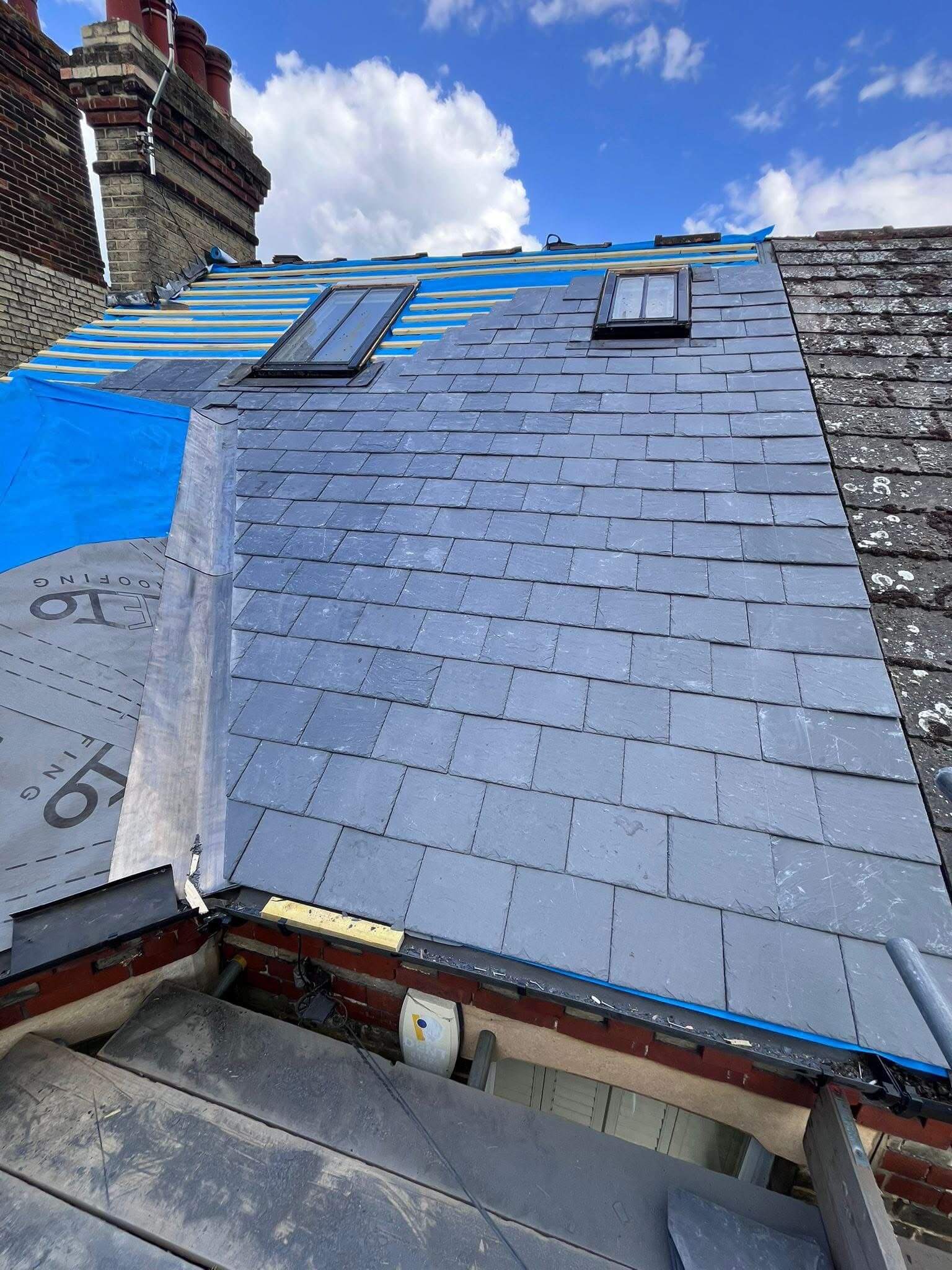
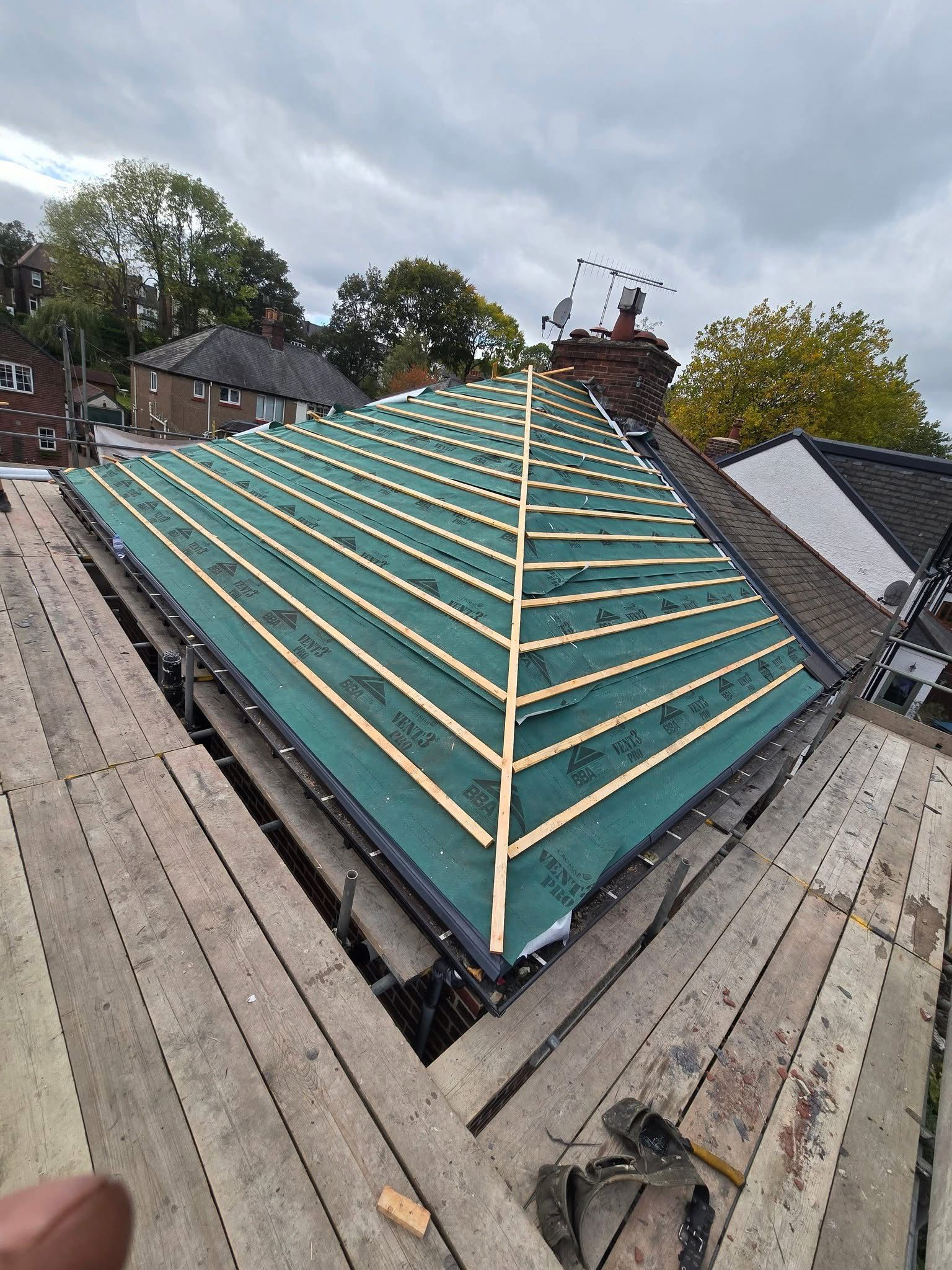
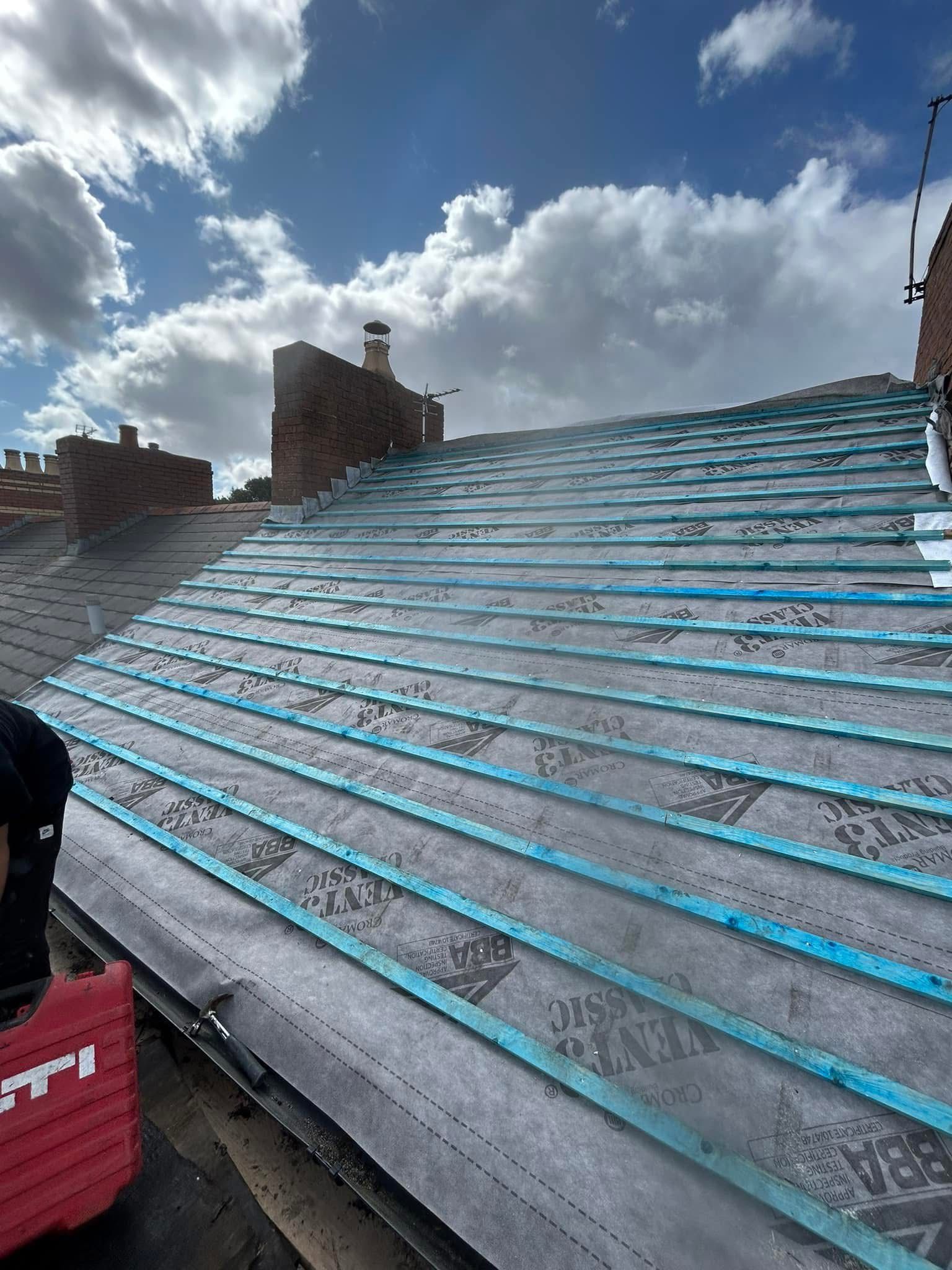
Where nail failure is concentrated in a specific area — a south-facing slope that's taken the most UV exposure, or a section damaged in a storm — we strip and re-slate that section rather than recommending a full roof replacement that isn't yet warranted. New breathable membrane, new treated battens, new stainless steel fixings, matched slates. Done properly, a re-slated section should perform for another 40–50 years.
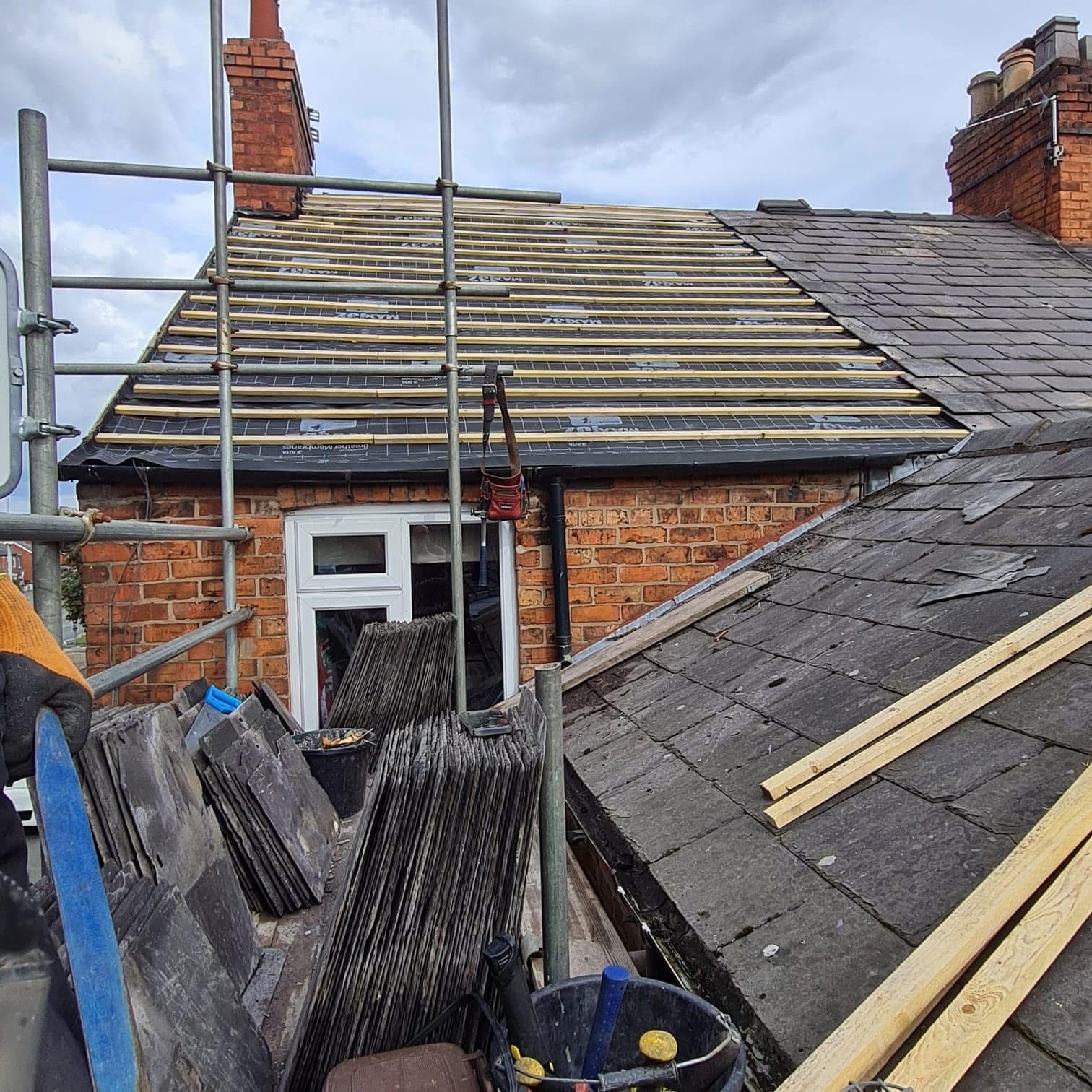
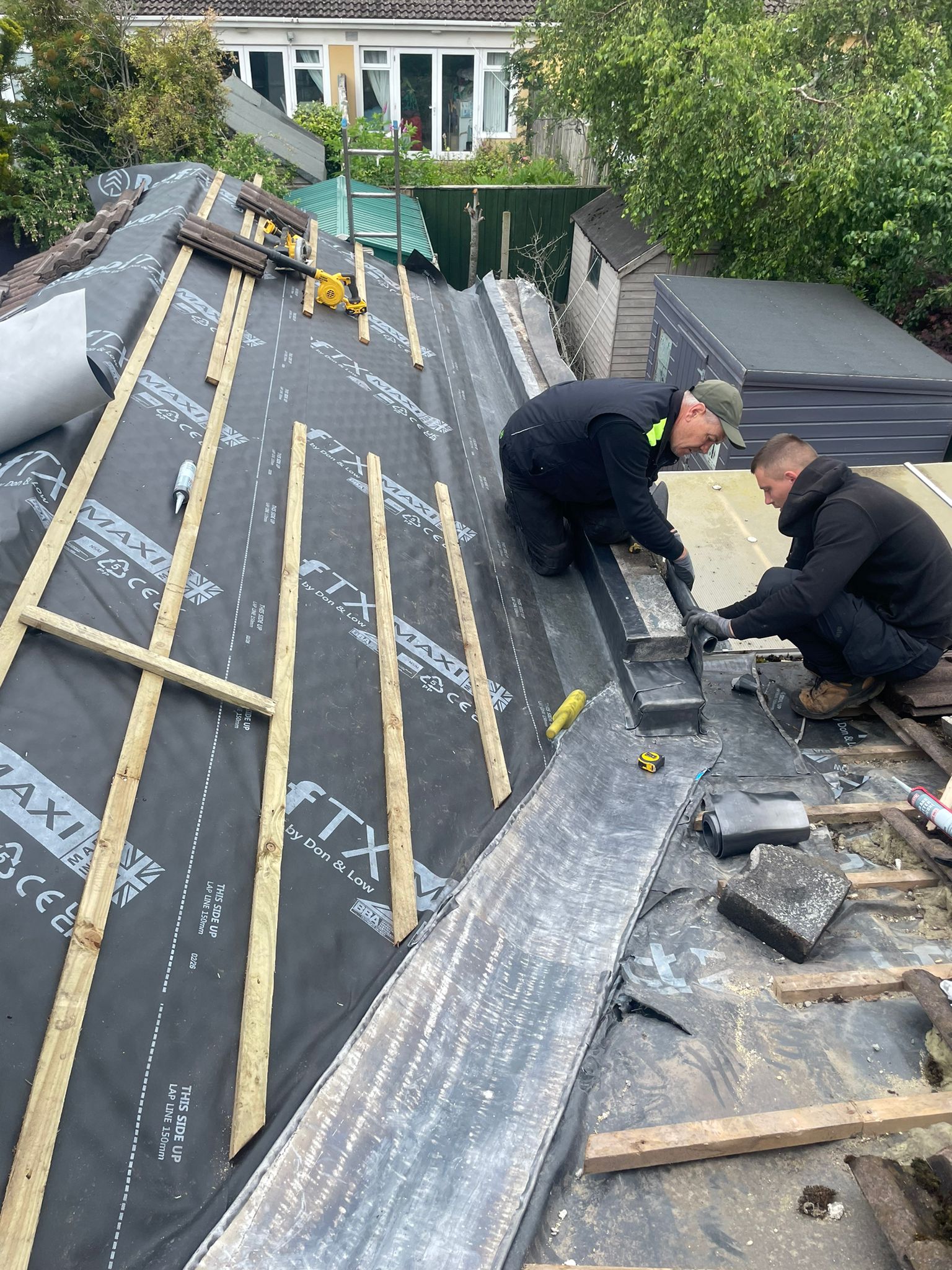
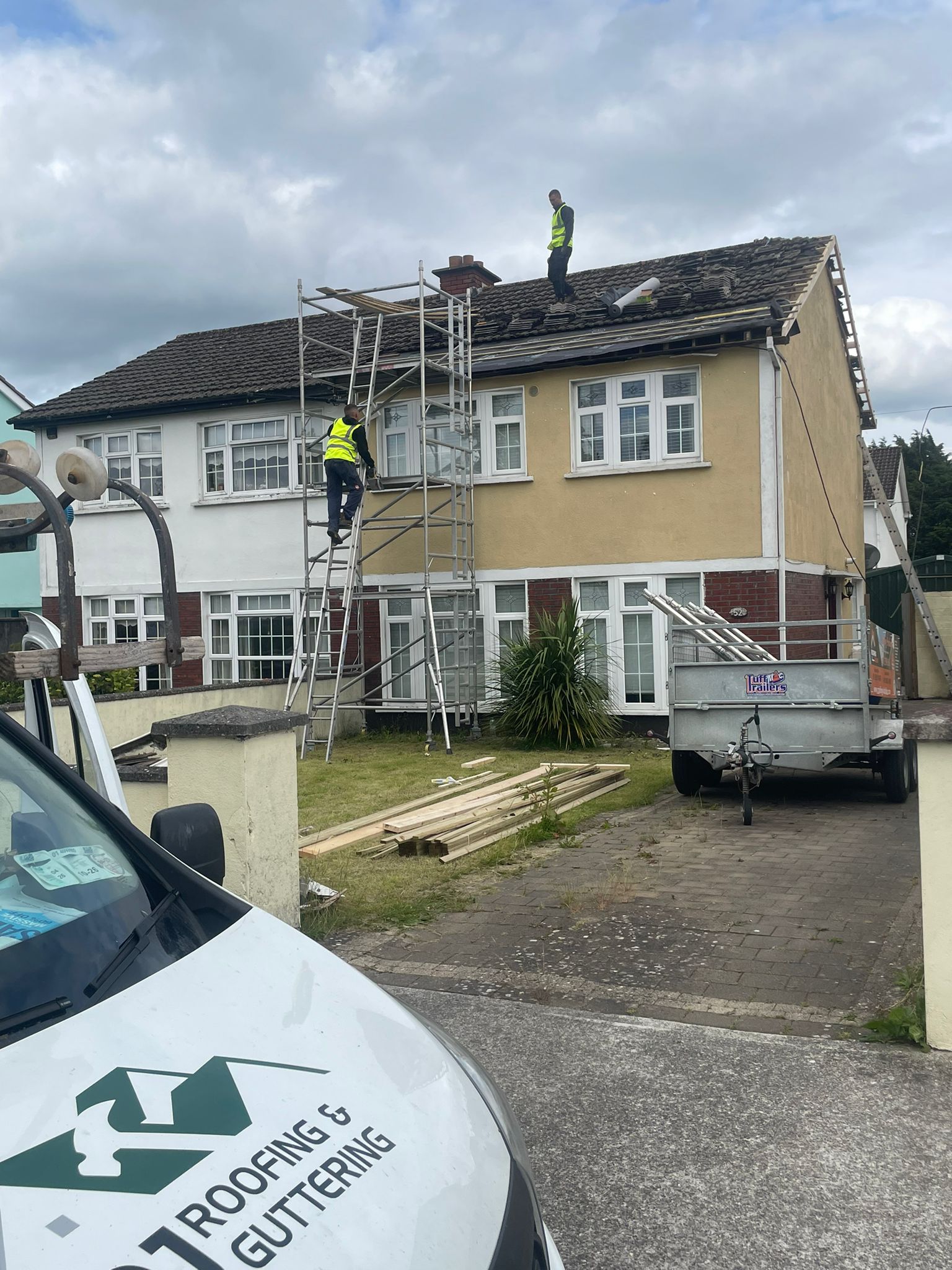
When nail fatigue has spread across the whole roof, or the felt beneath the slates has failed, full re-slating is the only honest answer. We strip the entire roof back to the structure, replace any rotten timber, install new breathable membrane and treated battens, and re-slate in matched natural or fibre cement slate with stainless steel fixings throughout. Not a patch job. A roof that won't need touching again for decades.
Getting the right slate matters — particularly on period properties in Navan town, Kells, Trim and the rural townlands of Meath where the original roof may be 60–80 years old and matching the stone type is important both aesthetically and structurally. We source from quality suppliers and are straight with homeowners about the difference between premium Welsh or Irish slate and cheaper imported Spanish slate, which varies enormously in quality and longevity.
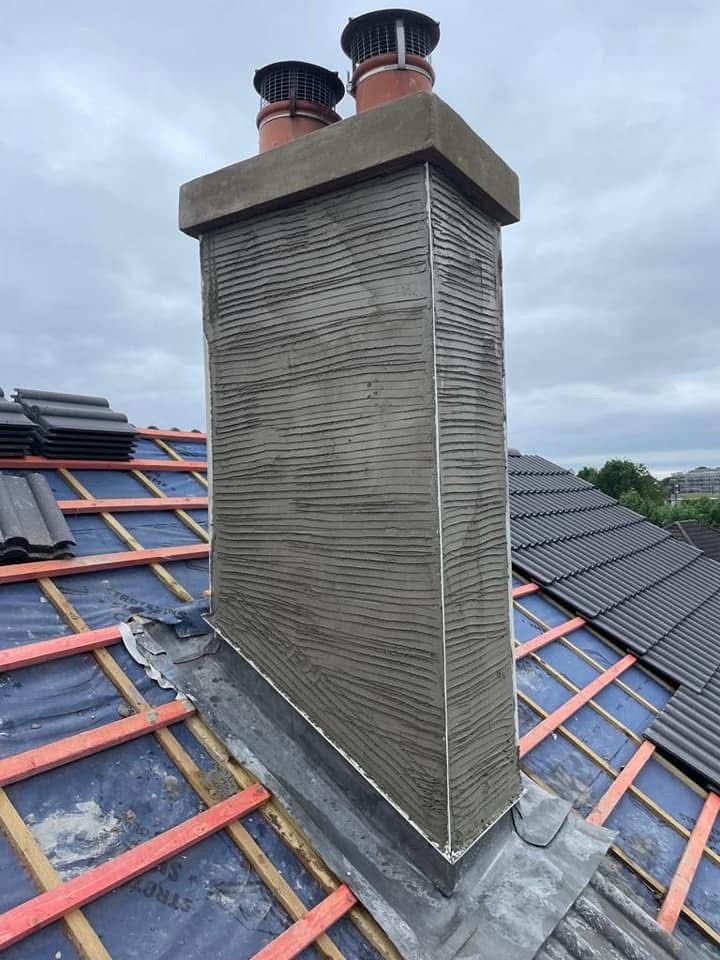
Ridge tiles and verge pointing are the most commonly neglected parts of a slate roof — and among the most common causes of leaks we deal with across Meath. We repoint or replace ridge tiles and install dry verge systems that eliminate the mortar failure point entirely. On any slate repair or re-slating job, ridge and verge condition is assessed as standard.
Real Results From The People Of Meath!
This question comes up on every re-slating job and deserves a straight answer rather than a recommendation based on what the contractor has in the yard.
Natural slate is the correct material for period properties across Navan town, Kells, Trim and the older rural townlands of Meath. It matches the original roof in appearance, weight, and character — and on a well-built older property with sound timbers, a natural slate re-roof should outlast the building itself. Lifespan of 75–100 years when quality slate is used.
The critical caveat on natural slate is quality varies enormously by source. Welsh slate is the benchmark — expensive but genuinely exceptional in Irish conditions. Spanish grey-black slate is the most commonly used in Ireland and covers a wide quality range from excellent to poor. Cheap imported slate at the lower end of the Spanish market can fail within 20 years. We source quality slate and tell homeowners exactly what they're getting before the order goes in.
Fibre cement slate (Tegral Blueslate being the most common in Ireland) is the right choice for properties built from the 1970s onward where the original roof was already fibre cement, or for homeowners where the cost difference between fibre cement and natural slate isn't justified by the property. Lifespan of 30–40 years, lighter than natural slate, colour-stable and consistent in appearance.
What fibre cement is not is a budget substitute for natural slate on a period Meath property. On a 100-year-old farmhouse in rural Meath, fibre cement looks wrong and devalues the character of the building. We'll tell you which material suits your property honestly.

DJ Roofing Meath is based in Navan and covers every part of County Meath. Our crew is on the road daily across the county — there's no area of Meath we don't reach.
Areas regularly served include:
Navan | Trim | Dunshaughlin | Ashbourne | Kells | Ratoath | Dunboyne | Athboy | Slane | Nobber | Oldcastle | Summerhill | Enfield | Longwood | Kilmessan | Laytown | Bettystown | Duleek | Stamullen | Skryne | Dunleer | Carnaross
Not sure if we cover your area? Call 046 900 5011 and we'll confirm straight away.
My slate roof is 50 years old but the slates themselves look fine — do I still need to worry?
Yes — and this is the most important question on any older Meath property. The slates may be perfectly sound while the nails holding them are at or past end of life. We test fixings across the whole roof during inspection, not just where slates have visibly moved. A slate that looks secure from the ground can be held by a nail that'll fail in the next storm.
Can you match my existing slates for a partial repair?
Usually yes. We source matching natural slate by stone type and colour, and matching fibre cement by profile and finish. On properties with unusual or older imported slate, matching can be more difficult — we'll tell you upfront if the match won't be close enough to be acceptable on a visible elevation.
How long does a slate repair take?
Individual slate replacements and small repairs are typically completed in a single visit. Section re-slating takes one to three days. Full re-slating on a semi-detached Meath property typically takes four to six days depending on size and weather.
Should I use stainless steel or copper fixings?
Stainless steel nails are our standard on all slate work — they outlast the slate itself in Irish conditions. Copper tingles for pinning slates that can't be conventionally nailed are also standard practice. We don't use galvanised fixings on any slate repair or re-slating — replacing nails that'll corrode in 40 years with nails that'll corrode in 40 years solves nothing.
Do you cover all of County Meath for slate work?
Yes — Navan, Trim, Kells, Ashbourne, Dunshaughlin, Ratoath, Dunboyne, Athboy, Slane, Oldcastle, Enfield, Laytown, Bettystown and all of Co. Meath.
Are you insured and certified for slate roofing?
Yes — fully insured, Safe Pass certified, and a member of the National Guild.

Whether it's a single slipped slate or a roof that's been losing slates for years and needs a proper assessment, start with a free inspection. We'll check the fixings, the felt, and the full condition of the roof — and give you a straight answer on what it actually needs.
Call us now. No call-out fees. No hidden charges. No hard sell.
DJ Roofing Meath provides a full range of roofing services for homeowners and commercial properties throughout County Meath.


DJ Roofing Meath — honest, reliable roofing across County Meath. Call Sean directly for a free quote.

Copyright © DJ Roofing Meath. All Rights Reserved.
Web Design by The Tradesman Marketing Experts




